What is Biotech?
What is Biotechnology, Really?
Understanding the science shaping our future, in plain language, no prerequisites required.
Biotechnology is using living systems (cells, bacteria, proteins, DNA) to create useful products or solve real problems.
Biotech = biology + technology to solve real problems.
The simplest definition that actually holds upIt sounds vague because biotech is incredibly broad. It touches medicine, agriculture, environmental science, manufacturing, and more. The best way to understand it is through examples.
Real-World Examples
Hover over each card (or tap on mobile) to see more.

Medicine
Hover to learn more
Medicine
Insulin for diabetics is made by bacteria engineered to carry the human insulin gene. CAR-T therapy takes your own immune cells, genetically reprograms them to recognize cancer, and injects them back.

Agriculture
Hover to learn more
Agriculture
Drought-resistant crops can survive on 30% less water. Plant-based meat uses heme (a protein from engineered yeast) to replicate the taste and texture of beef.

Environment
Hover to learn more
Environment
Bioremediation uses bacteria that break down petroleum into harmless compounds. Bioplastics made from plants instead of petroleum decompose in months, not centuries.
The Cutting Edge
Hover to learn more
The Cutting Edge
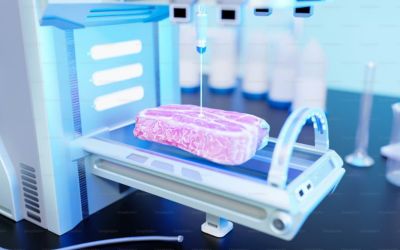
Bioprinting uses 3D printers loaded with living cells to build skin grafts, cartilage, and blood vessels. Mini-brains grown from stem cells are helping scientists study Alzheimer's without human trials.
Beyond the Science
A breakthrough in the lab is just the beginning. Getting from concept to the real world takes an entire team, and most of them aren't scientists.
Take mRNA vaccines. The underlying science existed for decades. Turning it into something that reached billions of people took business strategists, regulatory experts, manufacturing engineers, ethicists, and communicators working in parallel.
Someone had to decide what was worth pursuing and who would pay for it. Someone had to design safe trials and navigate the FDA. Someone had to figure out how to manufacture at scale without losing efficacy. Someone had to explain a brand-new technology to a skeptical public.
That's why biotech needs business people, engineers, lawyers, writers, and project managers just as much as it needs scientists.

Common Misconceptions
Not necessarily. Biotech employs humanities majors, business students, and engineers just as readily as biology PhDs. Science communication, operations, and regulatory affairs are all viable without a lab background.
Lab work is one slice of a much bigger picture. There's also manufacturing, regulatory affairs, sales, policy, data analysis, and more. The Career Pathways page shows the full range.
Only if you want to lead independent research. Most biotech jobs in regulatory, manufacturing, business, and operations require a bachelor's degree or less. Certificate programs can get you there in months, and there are entry points at every level.
Regulatory terminology varies by country. FDA = United States Food and Drug Administration. EMA = European Medicines Agency (EU). Health Canada oversees drug approvals in Canada. PMDA (Pharmaceuticals and Medical Devices Agency) regulates in Japan. When you see terms like "IND filing" or "NDA" below, those are US-specific — equivalent processes exist in other jurisdictions under different names and timelines.